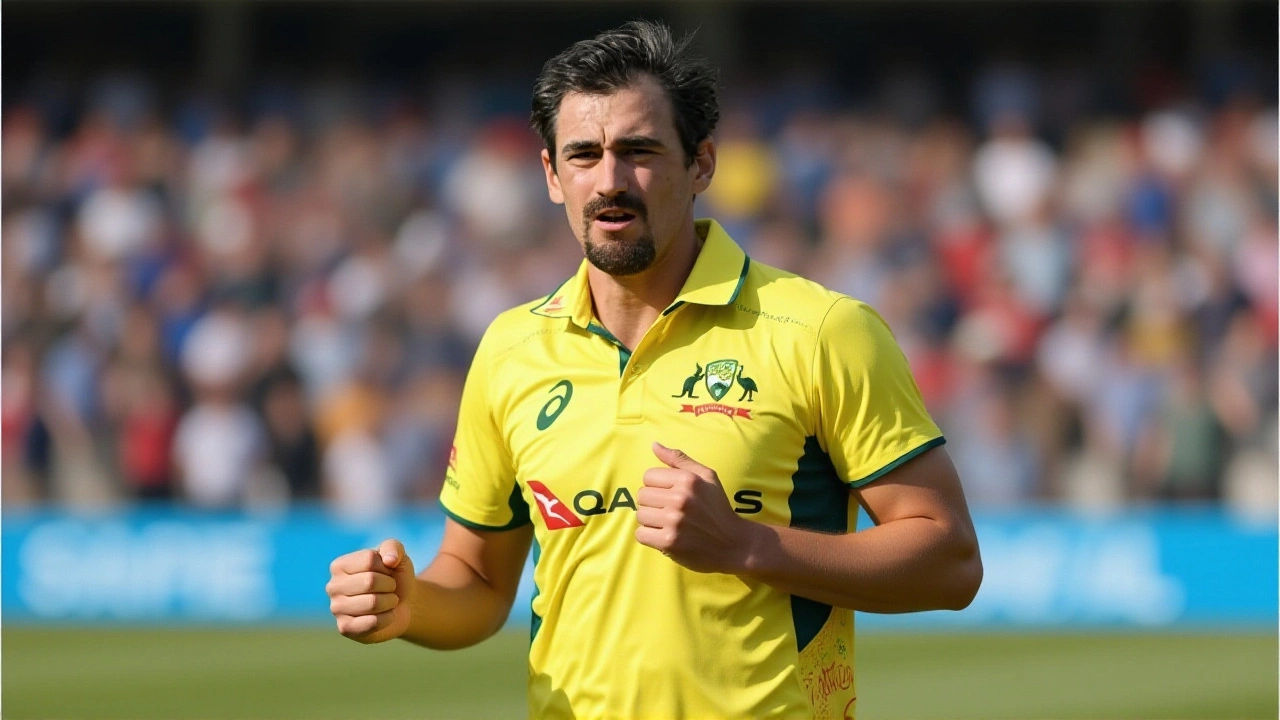
On Friday, November 21, 2025, Mitchell Aaron Starc didn’t just take wickets—he rewrote history. The 35-year-old Australian left-arm fast bowler delivered a career-best 7/58 to bowl out England for 172 on the opening day of the 2025-26 Ashes seriesOptus Stadium in Perth. It wasn’t just a great spell. It was a statement. Starc, operating without captain Pat Cummins and fellow pace spearhead Josh Hazlewood, reminded the cricket world why he remains the most feared left-arm quick in Test cricket. His figures weren’t just the best of his career—they were the best ever recorded at Optus Stadium. And with 104 Ashes wickets to his name, he’s now just five short of Wasim Akram’s all-time left-arm record of 414 Test scalps.
The First Over That Shook England
It began with a whisper, then exploded into a roar. Starc’s very first delivery of the series nipped back sharply and clipped Zak Crawley’s back pad. The lbw appeal was immediate. The umpire didn’t hesitate. Crawley became Starc’s 24th first-over victim in Test cricket—and the third Englishman on that list, after Adam Lyth and Rory Burns. The crowd at Optus Stadium didn’t just stand up—they jumped. Starc’s opening spell? 3/17 in 8 overs. Ben Duckett, trapped lbw for 12. Joe Root, dismissed for a seven-ball duck. England, 39/3 inside 15 overs. The aura around Starc has always been magnetic, but this was different. This felt like a man playing with time—older, wiser, and somehow faster than ever.
Why Starc at 35 Is More Dangerous Than Ever
Most fast bowlers fade by 35. Starc didn’t just survive—he evolved. He walked away from T20 internationals in 2022 and drastically cut back on franchise cricket. That wasn’t retirement from the game. It was strategic preservation. He traded the glitz of the IPL and Big Bash for the grind of Test cricket, letting his body recover, his technique sharpen. The results speak for themselves. Just before this Ashes opener, in his 100th Test against India, he took 6/9. Now, in his 101st, he’s posted his best figures ever. His economy rate? A stingy 3.66. His strike rate? One wicket every 11.3 balls. He’s not just bowling fast—he’s bowling with surgical precision. And it’s not luck. It’s discipline. He’s mastered the art of reverse swing at the death, the subtle seam movement off a worn pitch, and the psychological pressure of the first over. As he said afterward: “I guess a nice way to start a series.” Simple. Humble. Deadly.
A Legacy in First Overs
Starc’s first-over dismissals are a chilling checklist of top-order batsmen. His first? Murali Vijay, edged to Brad Haddin at the Sydney Cricket Ground in 2015. Since then, he’s haunted Indian openers—KL Rahul, Prithvi Shaw, Mayank Agarwal, and even Yashasvi Jaiswal, twice. He’s got Kraigg Brathwaite, Dean Elgar, Aiden Markram, Tom Latham, and Abdullah Shafique on his list too. No team escapes. No opener feels safe. In the 2024-25 Border-Gavaskar Trophy, Starc took three wickets in the final Test, helping Australia seal a 6-wicket win after India collapsed to 185 in their first innings. He didn’t dominate that match—he orchestrated it. Scott Boland took 4/31, but Starc’s 3/49 in 18 overs kept the pressure relentless. That’s the pattern: he doesn’t always take the most wickets, but he always breaks the back of the innings.
England’s Fightback and What Comes Next
England didn’t roll over. Their pace attack—led by Mark Wood and Jofra Archer—fought back with venom. Australia, chasing a modest target, collapsed from 85/2 to 123/9. But that’s the beauty of Test cricket. One great spell doesn’t win the match—it sets the tone. England’s lower order will need to dig deep. Australia’s debutant Beau Webster, who scored 39* in the final Test against India, will be under pressure to hold his nerve. But the narrative now belongs to Starc. With the series just beginning, his 7/58 has already shifted momentum. If he can replicate this intensity in Adelaide or Melbourne, England’s top order may never recover.
The Record That’s Within Reach
Wasim Akram’s 414 wickets stood for decades as the pinnacle for left-arm bowlers. Starc now sits at 409. Five wickets. That’s two more spells like this one. And at his current rate—averaging 4.1 wickets per Test this year—he could reach it by the end of the year. What makes it more remarkable is that Akram played 104 Tests. Starc has played 101. He’s doing it faster. Cleaner. With more precision. He’s not just chasing a record—he’s redefining what longevity looks like for a fast bowler in the modern era.
Frequently Asked Questions
How does Starc’s 7/58 compare to other Ashes bowling performances?
Starc’s 7/58 is the best bowling figure by an Australian in the Ashes since Glenn McGrath’s 7/19 in 2005. It’s also the best at Optus Stadium, surpassing the previous record of 6/42 by Brett Lee in 2004. Only 11 bowlers in Ashes history have taken seven or more wickets in a single innings—Starc is now the 12th. His 104 Ashes wickets place him seventh on the all-time list, ahead of legends like Shane Warne and Dennis Lillee in terms of Ashes-specific tally.
Why has Starc been so effective in first overs?
Starc’s first-over success stems from his ability to exploit the new ball’s shine and the batsman’s early nervousness. He consistently targets the off-stump corridor with steep angle and late swing. His action generates natural in-swing to right-handers, and he’s mastered the art of disguising slower balls. The mental edge is real—batsmen know he’s likely to strike early, and that pressure often leads to loose shots. He’s dismissed 24 openers in the first over, more than any other bowler since 2010.
What impact does Starc’s fitness have on Australia’s Test strategy?
By skipping T20s and limiting franchise commitments, Starc has preserved his body’s integrity, allowing him to bowl long spells in Tests without injury risk. This has made him Australia’s most reliable strike bowler in multi-Test series. With Cummins and Hazlewood often resting, Starc has become the fulcrum of their attack. His 101 Tests and 409 wickets are a direct result of this disciplined workload management—a model now being studied by younger fast bowlers across the world.
Could Starc break Wasim Akram’s record this year?
It’s very possible. Starc needs just five more wickets to reach 414. With five Tests in the Ashes series and potential home matches against India and South Africa later this year, he has at least 10 innings to achieve it. His current form suggests he’s averaging 4.1 wickets per Test. If he maintains that, he could reach the record by February 2026. No left-arm bowler has ever reached 414 wickets in fewer than 104 Tests—Starc could do it in 103.
How does this performance affect Australia’s chances in the Ashes series?
Australia now holds a massive psychological advantage. Winning the first Test at Perth, where pitches favor pace, gives them control of the series. England’s top order, already rattled by Starc’s early strikes, will face immense pressure in the next Tests. With Starc firing and Boland in rhythm, Australia’s bowling attack is arguably the most lethal it’s been since 2019. A 4-1 series win is now within reach—and Starc’s name will be at the center of every headline.