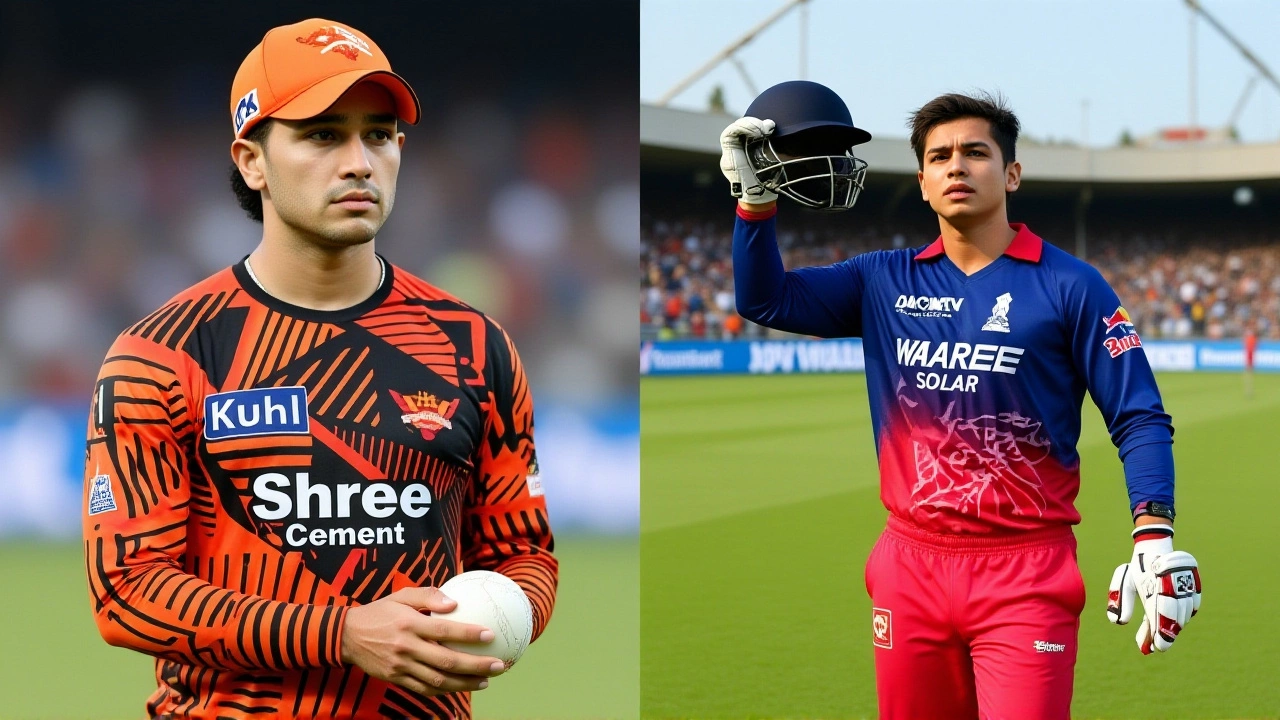
Cricket fans are witnessing a genuine clash of generations, or perhaps a clash of the "new age," as Vaibhav Suryavanshi, the 15-year-old sensation for Rajasthan Royals, goes head-to-head with Abhishek Sharma of Sunrisers Hyderabad. While one is a record-breaking teenager and the other an established powerplay destroyer, both are rewriting the blueprint of T20 batting. This rivalry isn't just about runs; it's about a fundamental shift toward a "fearless" brand of cricket where the strike rate is king and the bowler is always under pressure.
Here's the thing: we've seen young talents before, but Suryavanshi is something else entirely. He didn't just enter the league; he crashed through the doors on April 19, 2025, becoming the youngest player in the history of the Indian Premier League at the tender age of 14 years and 23 days. To put that in perspective, most kids that age are worrying about school exams, not facing 145km/h deliveries from world-class pacers.
A Tale of Two Aggressors
Looking back at the 2025 season, Suryavanshi's numbers were a statement of intent. Across 7 matches, he hammered 252 runs at a strike rate of 206.55. He didn't just nudge the ball for singles; he cleared the boundary 26 times for sixes and 18 times for fours. It was a masterclass in intimidation from a player who barely looks like he's hit puberty.
Then you have Abhishek Sharma. If Suryavanshi is the new kid on the block, Sharma is the one who showed the league how to maximize the powerplay. In 2025, he was a beast, compiling 439 runs over 14 matches. Fast forward to 2026, and the momentum hasn't slowed. In his first four games this season, Sharma has racked up 129 runs with a blistering strike rate of 218.64. His standout moment? A 74-run carnage off just 28 balls against the Punjab Kings that left the bowling attack searching for answers.
Interestingly, both players share a similar DNA: left-handed, aggressive, and completely uninterested in "settling in" to the crease. They represent the modern T20 philosophy where the first six overs are treated as a sprint, not a marathon.
The Drama of April 14: A Rare Quiet Day
But cricket is a game of weird contradictions. On Monday, April 14, 2026, the hype met a harsh reality. In a high-stakes encounter between Rajasthan Royals and Sunrisers Hyderabad, both superstars suffered a rare "duck." It was a shock to the system—two of the most destructive young batters in the world, both scoring zero.
For Rajasthan, the day was a disaster. The team lost three wickets in the very first over, sparking a total batting collapse. But the real story was behind the scenes. Turns out, Suryavanshi wasn't exactly thrilled with his role. The Rajasthan coach revealed that the youngster was unhappy about being utilized as an "impact player" instead of his usual opening slot. Whether that mental friction played a part in his zero is speculative, but it certainly disrupted the rhythm of a team that had been on a tear.
The loss was a bitter pill to swallow for RR, ending an impressive four-match winning streak. Until then, they had sat comfortably at the top of the table with 8 points. Even Jofra Archer couldn't save the day, despite a solid spell where he claimed 2 wickets for 37 runs over 4 overs.
SRH's Recovery and Tactical Superiority
On the other side, SRH also faced an early scare. With Abhishek Sharma gone early and Travis Head falling for 18, the innings looked fragile. However, Ishan Kishan, leading as captain, stepped up to stabilize the ship. Kishan has been in fine form in 2026, scoring 122 runs in 4 matches, including a dominant 80-run half-century.
Kishan didn't just stabilize; he accelerated. He found reliable partners in Heinrich Klaasen (40 runs off 26 balls), Nitish Reddy (28 runs), and Salil Arora, who finished not out on 24. Their collective effort ensured that SRH didn't just survive the collapse—they thrived on it.
The Bigger Picture: Why This Matters
Why should we care about two kids hitting sixes? Because it signals a permanent shift in Indian cricket. For years, the "classical" approach was prized. Now, we have a 15-year-old who can stare down someone like Jasprit Bumrah and actually score. It's a level of confidence we haven't seen in the domestic circuit before.
The impact on the game is twofold. First, it forces bowlers to rethink their lengths; you can't just bowl "safe" lines anymore. Second, it lowers the average age of entry into the elite level. If Suryavanshi can average a 200+ strike rate at 14, the talent pipeline in India is moving faster than ever.
Looking ahead, the battle for supremacy between these two will likely define the next decade of T20 cricket. While Sharma has the experience and the consistency, Suryavanshi has the raw, untapped potential of a prodigy. The real winner here is the spectator.
Frequently Asked Questions
How did Vaibhav Suryavanshi make IPL history?
Vaibhav Suryavanshi became the youngest player to ever debut in the Indian Premier League when he played against the Lucknow Super Giants on April 19, 2025. He was just 14 years and 23 days old at the time, shattering previous age records for the tournament.
What were the stats for Abhishek Sharma in IPL 2026 so far?
In the first four matches of the 2026 season, Abhishek Sharma has scored 129 runs at an average of 32.25 and a strike rate of 218.64. His highest score of the season was 74 runs off 28 balls against the Punjab Kings.
Why did Rajasthan Royals struggle in the match on April 14, 2026?
The team suffered a massive batting collapse, losing three wickets in the first over. Additionally, internal friction was reported, as Vaibhav Suryavanshi was reportedly unhappy about being used as an impact player rather than an opener, which may have affected the team's synergy.
Who led Sunrisers Hyderabad to victory against RR?
Captain Ishan Kishan played a pivotal role in recovering from early wickets. He was supported by Heinrich Klaasen, who scored 40 runs, and steady contributions from Nitish Reddy (28) and Salil Arora (24*), allowing SRH to overcome the Rajasthan Royals.